

As a supplier of 3 Ton Road Rollers, I often encounter questions from customers about the suitability of our equipment for various construction tasks. One common query is whether a 3 Ton Road Roller can be used for the compaction of backfill soil. In this blog post, I will delve into this topic, exploring the factors that determine the effectiveness of a 3 Ton Road Roller in backfill soil compaction and providing insights to help you make an informed decision.
Understanding Backfill Soil Compaction
Backfill soil compaction is a crucial step in construction projects, as it ensures the stability and durability of the structure built on top of the backfilled area. Compaction reduces the air voids in the soil, increasing its density and strength. This process helps prevent settlement, which can lead to structural damage over time.

The effectiveness of soil compaction depends on several factors, including the type of soil, its moisture content, and the compaction equipment used. Different types of soil, such as clay, sand, and gravel, have different compaction characteristics. For instance, clay soils are more difficult to compact than sandy soils due to their fine particles and high plasticity.
The Role of a 3 Ton Road Roller in Backfill Soil Compaction
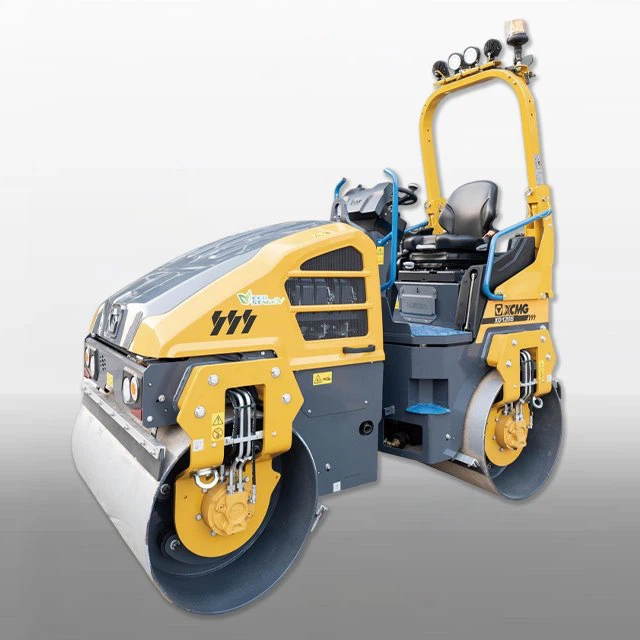
A 3 Ton Road Roller is a versatile piece of equipment that can be used for a variety of compaction tasks, including backfill soil compaction. Its relatively small size and maneuverability make it suitable for use in confined spaces, such as trenches and small construction sites.
The compaction force of a 3 Ton Road Roller is generated by its weight and, in the case of 3 Ton Vibratory Road Roller, the vibration mechanism. The weight of the roller applies static pressure to the soil, while the vibration helps to rearrange the soil particles, reducing air voids and increasing density.
Factors Affecting the Suitability of a 3 Ton Road Roller for Backfill Soil Compaction
Soil Type
As mentioned earlier, different soil types have different compaction requirements. A 3 Ton Road Roller is generally more effective for compacting granular soils, such as sand and gravel, than cohesive soils, such as clay. Granular soils have larger particles and lower plasticity, making them easier to compact. However, with proper techniques and multiple passes, a 3 Ton Road Roller can also achieve satisfactory compaction results in cohesive soils.
Moisture Content
The moisture content of the soil is another critical factor in compaction. For optimal compaction, the soil should be at its optimum moisture content (OMC). At the OMC, the soil particles can be easily rearranged, and the compaction efficiency is maximized. If the soil is too dry, it will be difficult to compact, while if it is too wet, it may become soft and unstable. A 3 Ton Road Roller can be used to compact soil at the appropriate moisture content, but additional measures, such as watering or drying, may be required to adjust the moisture level.
Layer Thickness
The thickness of the backfill soil layer also affects the compaction process. It is recommended to compact the soil in thin layers to ensure uniform compaction throughout the depth. A 3 Ton Road Roller can effectively compact soil layers up to a certain thickness, typically around 150 - 200 mm. If the layer thickness is too large, the compaction force may not penetrate to the bottom of the layer, resulting in inadequate compaction.
Compaction Passes
The number of compaction passes required depends on the soil type, moisture content, and layer thickness. Generally, multiple passes are needed to achieve the desired compaction density. A 3 Ton Road Roller can make several passes over the backfill soil to gradually increase its density. The exact number of passes can be determined through field tests and compaction specifications.
Advantages of Using a 3 Ton Road Roller for Backfill Soil Compaction
Maneuverability
One of the main advantages of a 3 Ton Road Roller is its maneuverability. It can easily navigate around obstacles and work in tight spaces, making it ideal for backfill soil compaction in trenches, around foundations, and in other confined areas.
Cost-Effectiveness
Compared to larger road rollers, a 3 Ton Road Roller is more cost-effective in terms of purchase price, fuel consumption, and maintenance. It is a suitable option for small to medium-sized construction projects where budget is a concern.
Versatility
In addition to backfill soil compaction, a 3 Ton Road Roller can be used for other compaction tasks, such as compacting asphalt pavements, gravel roads, and parking lots. This versatility makes it a valuable asset for construction companies.
Case Studies
Let's take a look at some real-world examples of using a 3 Ton Road Roller for backfill soil compaction.
In a residential construction project, a 3 Ton Road Roller was used to compact the backfill soil around the foundation of a house. The soil was a mixture of sand and gravel, and the roller was able to achieve the required compaction density in a relatively short time. The maneuverability of the roller allowed it to work closely around the foundation walls, ensuring uniform compaction.
In another project, a Vibratory Roller XCMG XS400J was used to compact the backfill soil in a trench for a utility line installation. The soil was clayey, and the vibration function of the roller helped to improve the compaction efficiency. By making multiple passes and adjusting the moisture content of the soil, the desired compaction results were achieved.
Conclusion
In conclusion, a 3 Ton Road Roller can be effectively used for the compaction of backfill soil, especially in granular soils and in confined spaces. However, its suitability depends on several factors, such as soil type, moisture content, layer thickness, and the number of compaction passes. By considering these factors and using proper compaction techniques, a 3 Ton Road Roller can help you achieve the desired compaction density and ensure the stability of your construction project.
If you are considering using a 3 Ton Road Roller for your backfill soil compaction needs, I encourage you to reach out to us for more information. Our team of experts can provide you with detailed technical specifications and advice on the best equipment for your project. Whether you need a Compacting Vibratory Roller or a standard 3 Ton Road Roller, we have the right solution for you. Contact us today to start the procurement negotiation process and take the first step towards a successful construction project.
References
- Bowles, J. E. (1996). Foundation analysis and design (5th ed.). McGraw-Hill.
- Coduto, D. P., Kitch, K. L., & Duncan, J. M. (2011). Geotechnical engineering: principles and practices. Wiley.
- Holtz, R. D., & Kovacs, W. D. (1981). An introduction to geotechnical engineering. Prentice-Hall.
